
Chapter One: Meeting Franco
After the shaman training in the Amazon had brought back that deep gratitude for the people close to me, one face kept surfacing in my mind: Franco, my closest friend, living in Argentina, on the other side of the world from Japan.
I met Franco in 2018, while I was still living in the Philippines and partway through my trip around the world. I crossed into Mexico from Belize by bus and checked into a dormitory — a shared room, about a thousand yen a night — in the resort town of Cancún. The young Argentine staying there, nineteen at the time, was Franco.
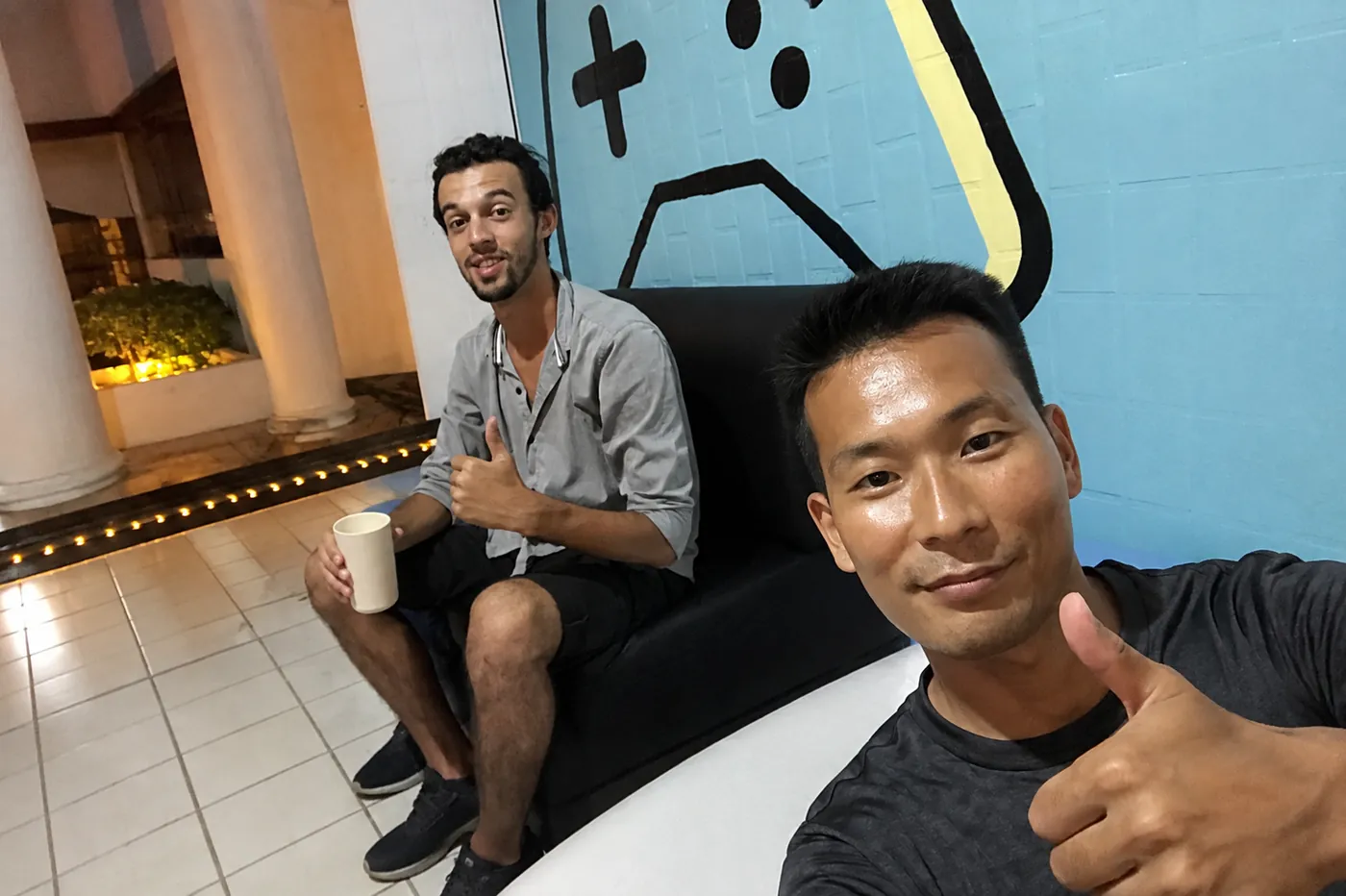
I had studied Spanish in Guatemala a little earlier, but I still could not manage everyday conversation. Franco looked out for me and showed me around Cancún. We were together only a few days, but we hit it off at once.
And as we were saying goodbye, Franco said this.
“I’m going home to Argentina soon, so you have to come to Argentina too. When you do, you can stay at my place.”
It was impossible to hear that as mere politeness.
Chapter Two: The youth I found in Argentina
After Mexico I traveled through Peru and Bolivia, and then went to see Franco in Buenos Aires, the capital of Argentina.
Franco lived with his mother, his younger brother and his younger sister. I was a Japanese man they knew nothing about, someone Franco had met in Mexico, and they took me in as readily as family.
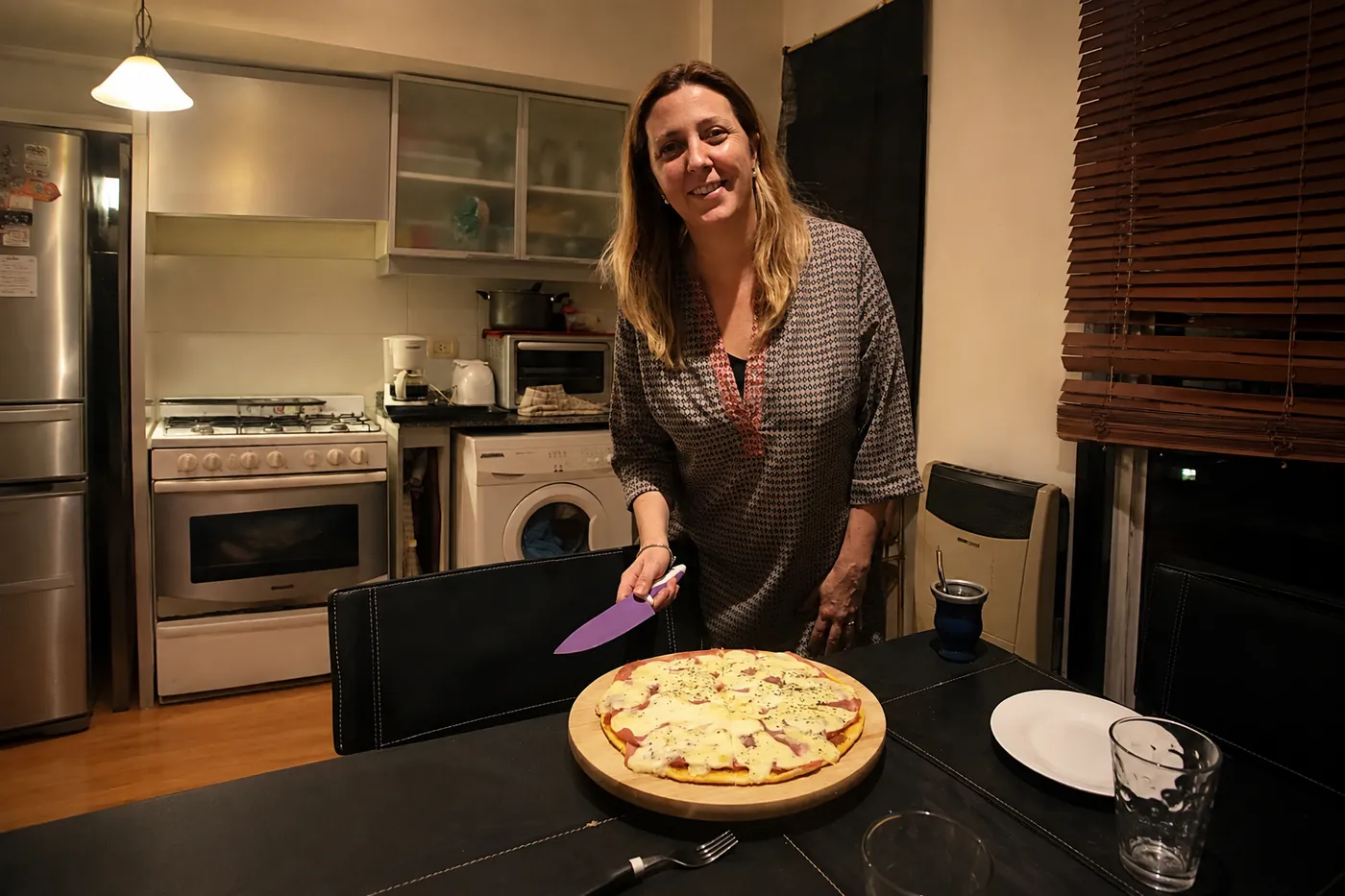
They let me stay at Franco’s house for a week, and every day he showed me somewhere wonderful in Buenos Aires. There were evenings when I sat with the family around an asado, the traditional Argentine barbecue over charcoal.
But what stayed with me most was not those “special occasions.” It was the time I spent with Franco’s friends from the neighborhood.
We did nothing in particular. PlayStation at a friend’s house, beer, a run out for hamburgers in the middle of the night. That was all.
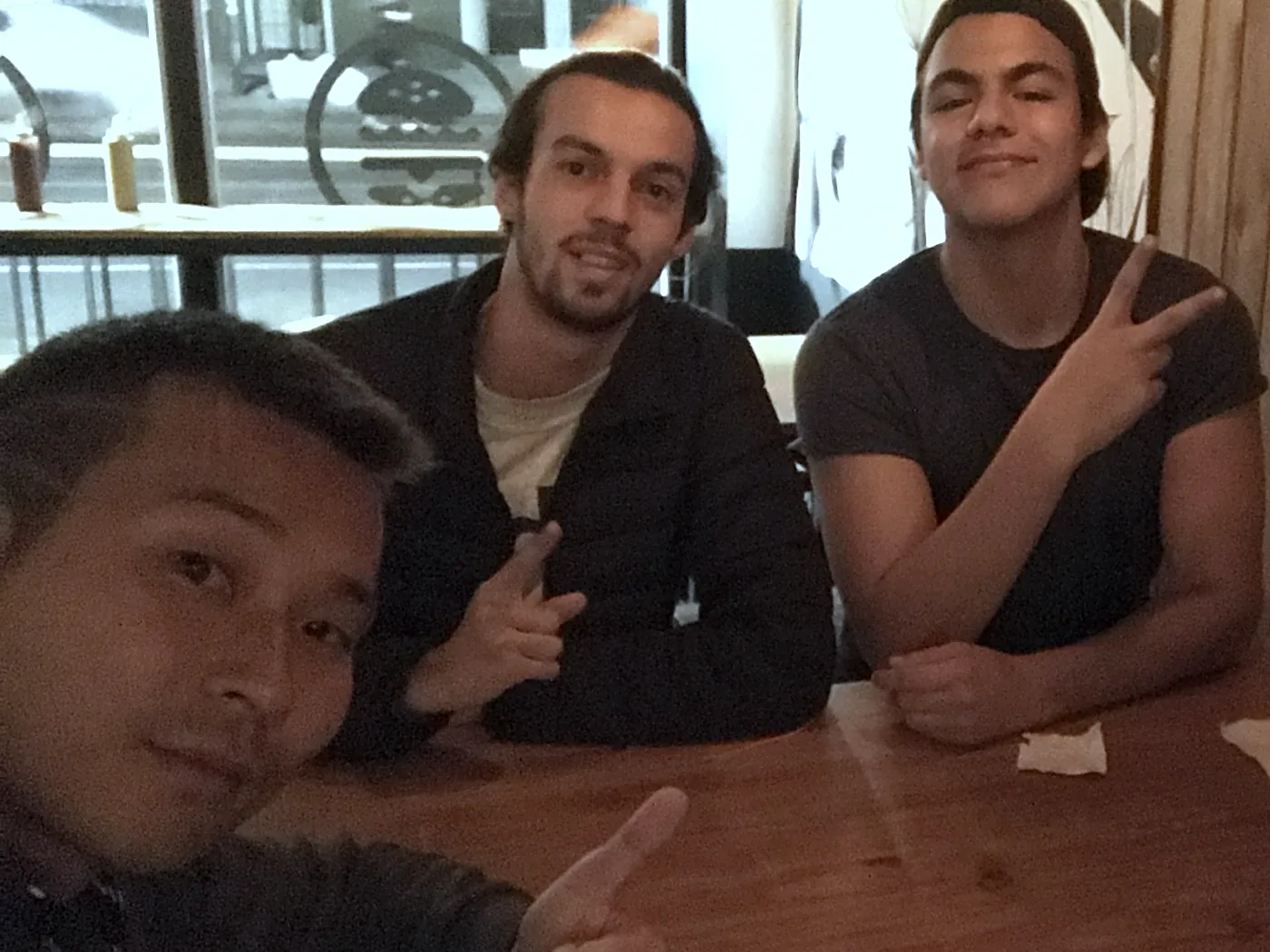
I left school after junior high and started working instead of going on to high school, so I became an adult without ever really having a youth. For me, that pointless time with Franco and his friends was the first “youth” I had ever had. Every day was fun, and I was happy.
A Japanese man past thirty, on the other side of the world from Japan, taken in by a group of teenagers and having his youth at last. Something in how generous they were got to me, and I came to love Argentines.
We promised each other we would meet again someday, and I went on with my trip.
Chapter Three: The mate gourd that arrived
I went on through Europe, the Middle East and Asia, and finished my trip around the world back in the Philippines, where I married my wife. She said she wanted to try living in Japan, and so I went home for the first time in years.
Some time after I got back, a parcel arrived from Franco by international courier. Inside were a mate gourd and a bombilla.
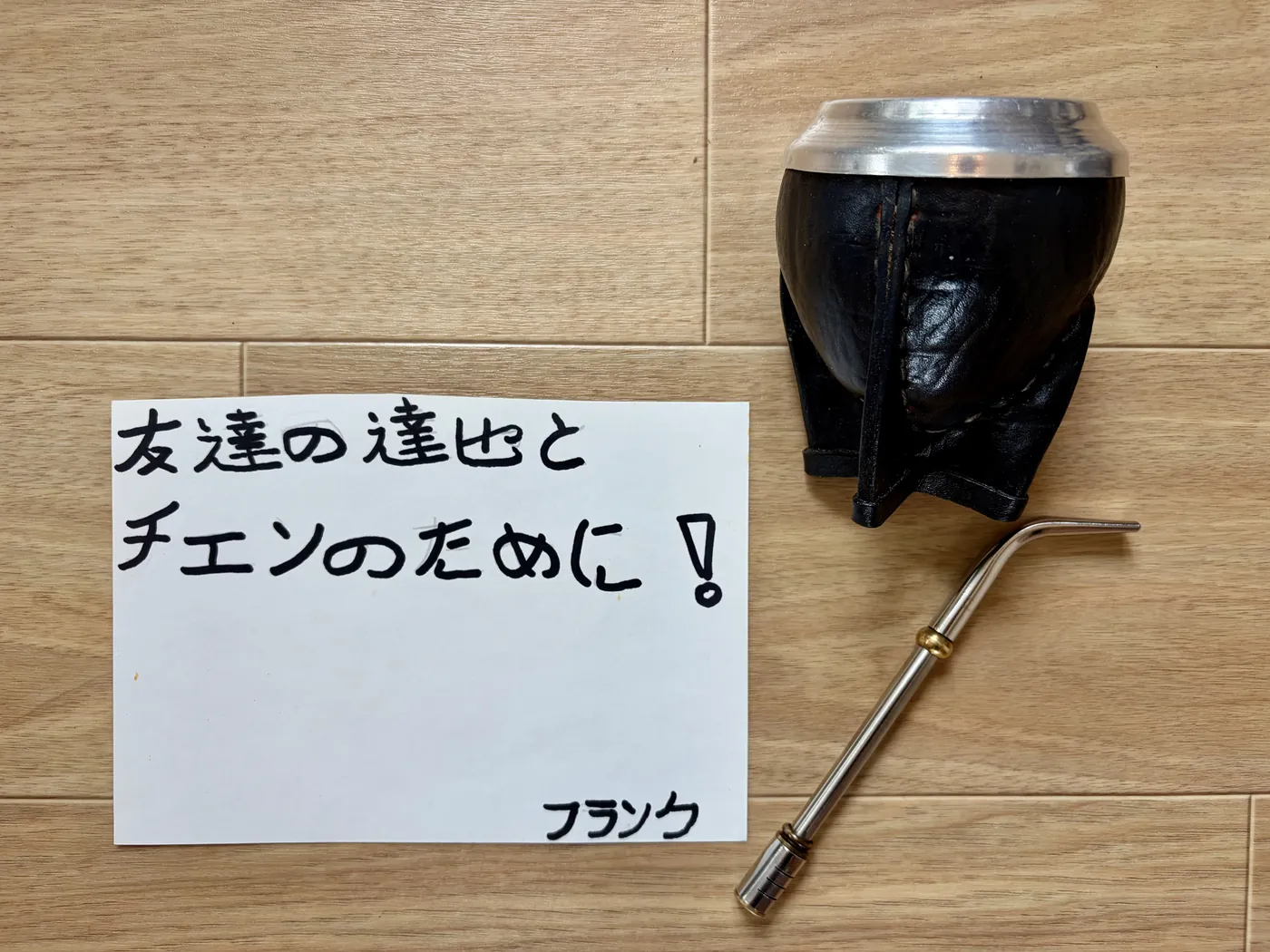
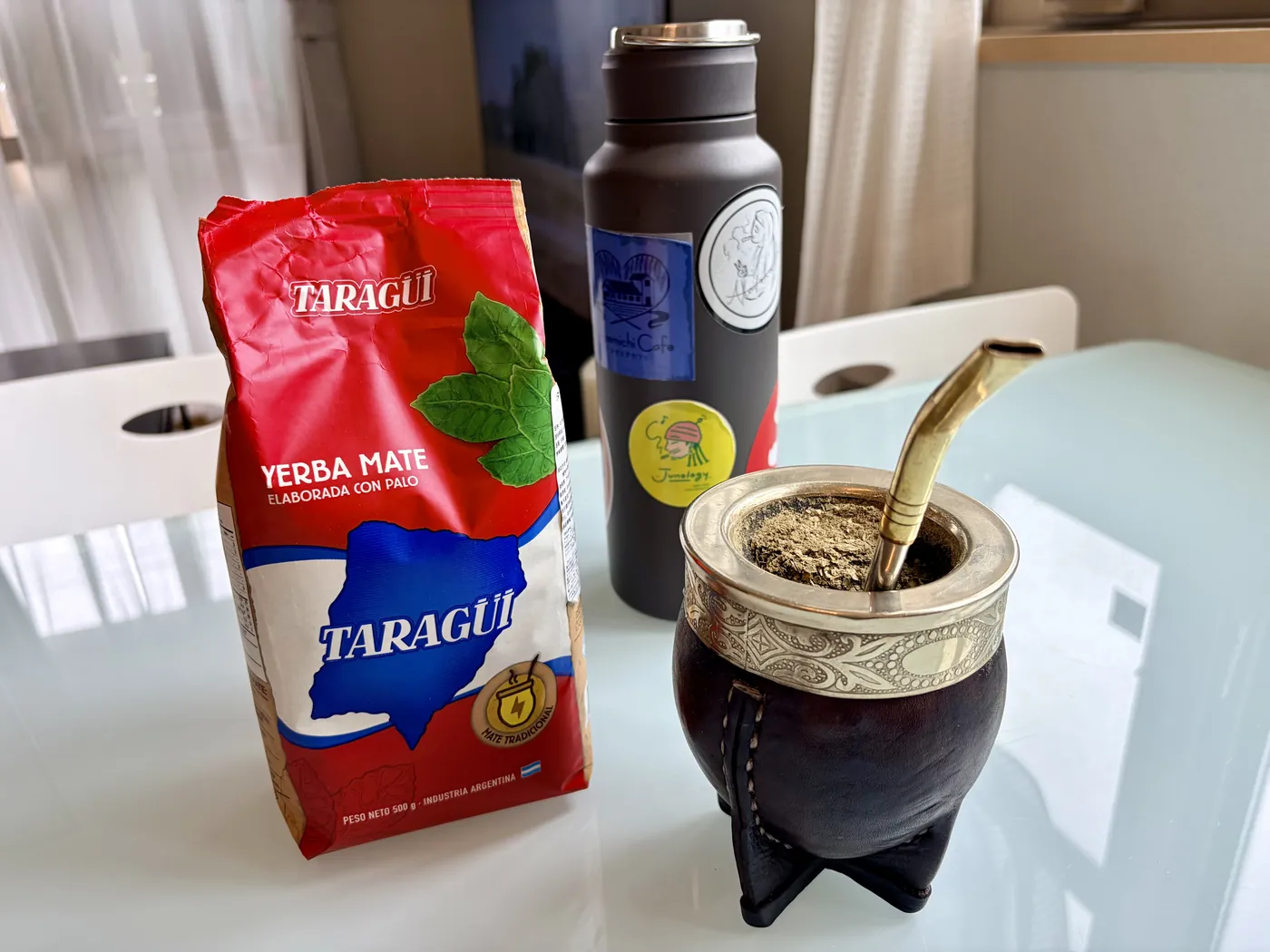
A mate gourd is the cup South Americans drink yerba mate from: a hollowed-out gourd wrapped in real leather. Before you can use one for the first time you have to prepare it over several days — it is the real thing. A bombilla is a metal straw with a filter at the tip.
That was my first meeting with yerba mate. But I had not yet understood what was good about it, and I kept it on display in my room as a beautiful antique.
Chapter Four: Seven years later, and the life I had been looking for
Living in Japan, I stayed in touch with Franco, but Buenos Aires is a longer flight from Tokyo than anywhere in Africa. Seeing him again was not a simple matter. Still, I did not want that time to become nothing more than a memory. To stay friends for life, we had to meet again someday, without fail.
Then, in 2025, the chance came: the shaman training in the Peruvian Amazon. Peru and Argentina are on the same continent, but the distance between them is like flying from Japan to Vietnam. Even so, it was far closer than starting from Japan.
“If I let this chance go, who knows when I’ll see him again.”
When the training in the Amazon was done, Ryoma and I flew straight on to Argentina. Seven years had gone by.
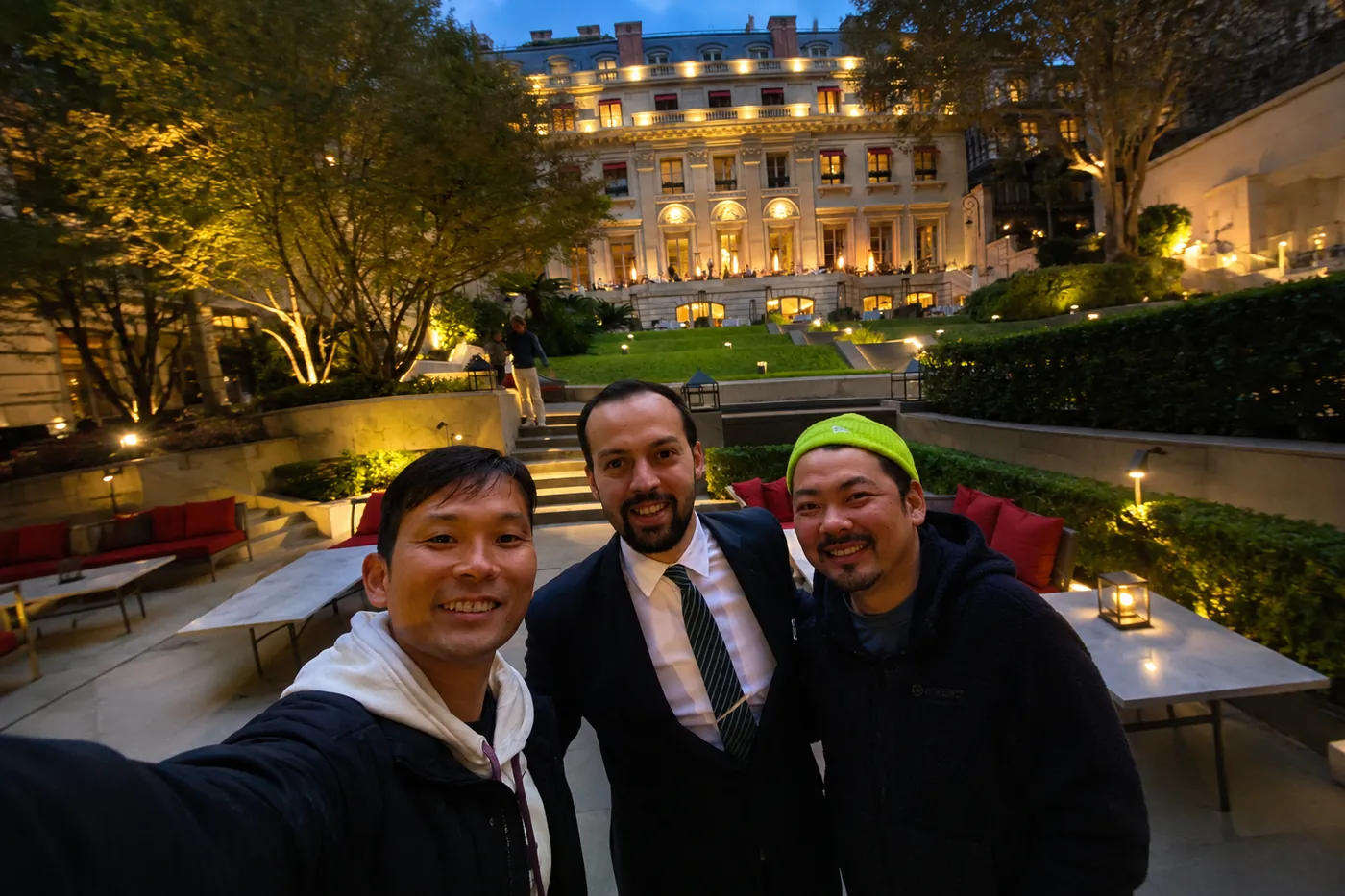
Franco, nineteen when we met, was twenty-six now, wearing a sharp suit and working at a first-class hotel. He had married a lovely woman. His mother was as warm as ever, and his younger brother had grown so dependable I barely recognized him. I got to see Negro, Chino and the rest of his friends again as well — in Argentina those two are affectionate nicknames.
We went to a football match at a stadium in Buenos Aires. The same faces as seven years before, making the same amount of noise. What had changed was that they were no longer “Franco’s friends.” They had become entirely my own.
Argentines really are the best. They think of others, they are full of affection, and they take another person’s joy as their own. Compared with my home country of Japan, they seemed to be enjoying their lives on a completely different scale.
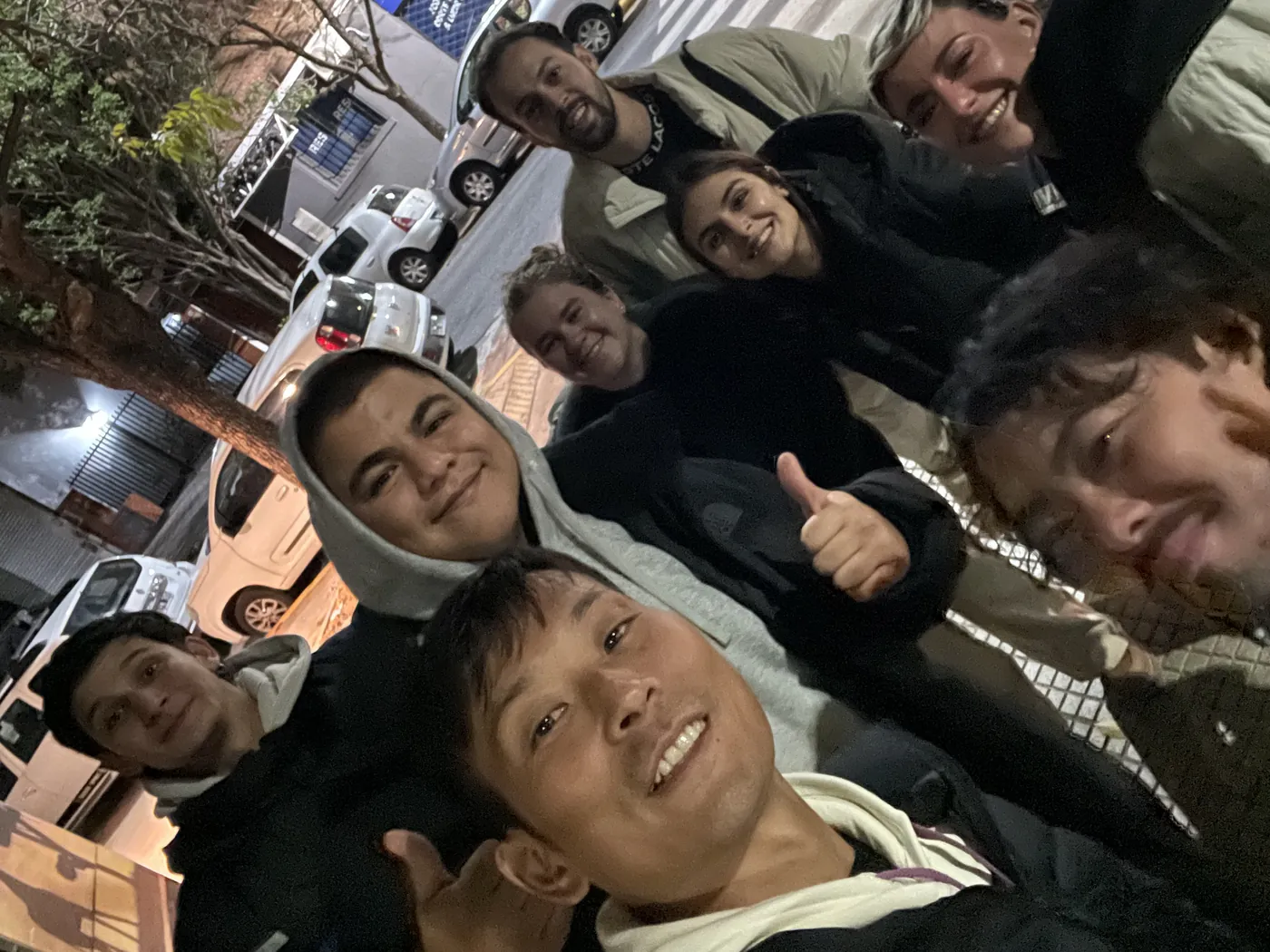
It struck me that I wished I had been born Argentine. Over the same near-century of a life, they must be far happier. But of course that is not something you can have.
So I thought about it differently.
“If I copy something of the way they live, maybe I can enjoy my life the way they do.” What I settled on was yerba mate.
Chapter Five: Mate culture at the source, and its taste
In Argentina, yerba mate is not simply a drink. It is a way of living.
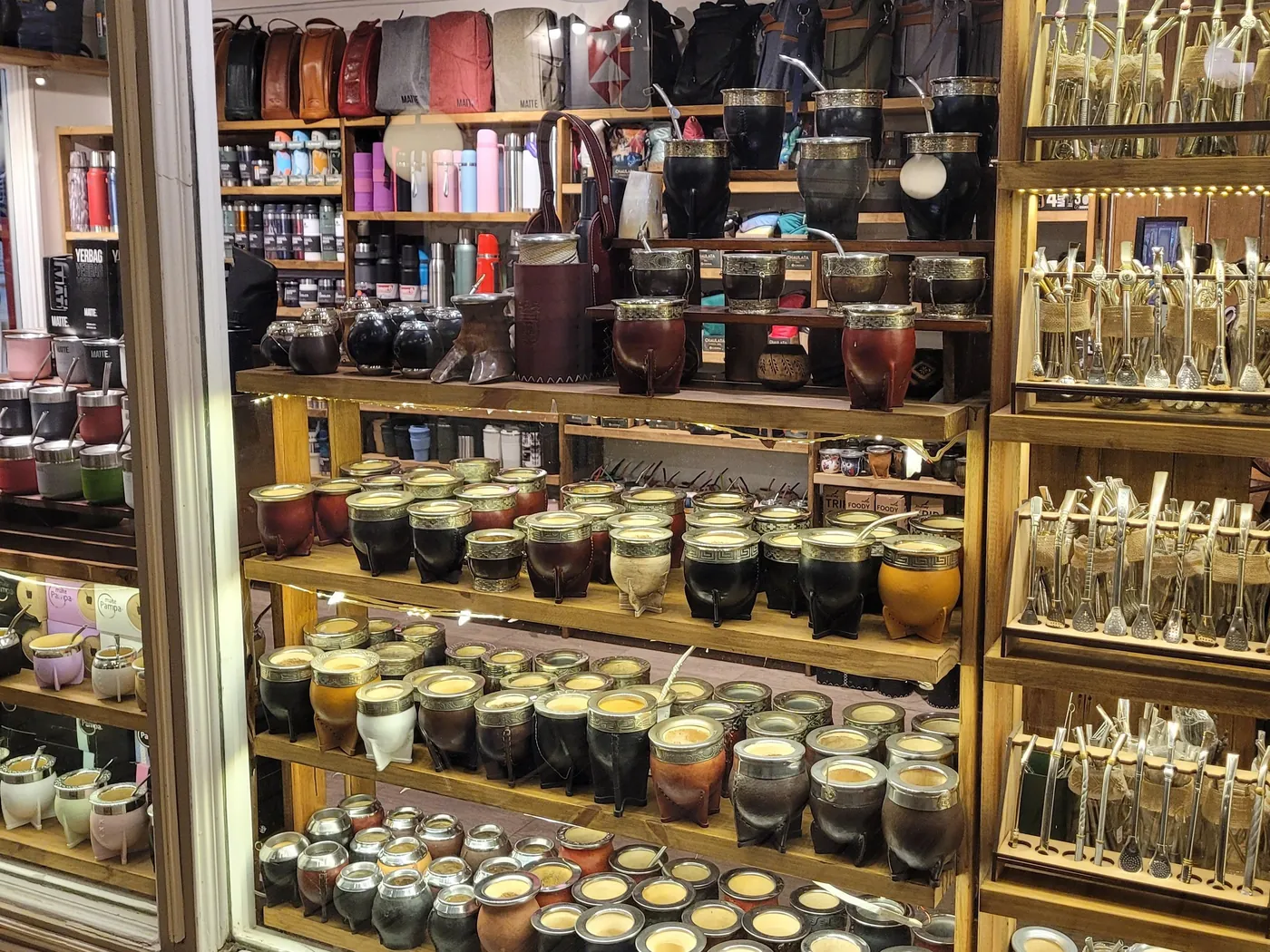
When people gather in a park, someone brings a gourd already packed with leaf, a bombilla, and a thermos of hot water. Then everyone drinks from the same bombilla, passing it around. Walk down the street and you pass people with a thermos tucked under one arm; on the bus, on a bench, there is always a gourd in someone’s hand.
“When I get back to Japan I’ll bring mate into my own life. Maybe then I can enjoy things the way they do, in that same positive frame of mind.”
I already had a real gourd and bombilla at home in Japan, the ones Franco had sent me. But they are traditional, made from natural materials, and they have to air-dry after use — if you want to drink every day, you need a spare.
So Franco took me to a shop, and I bought a second set.
The owner made me a mate on the house.
I took the gourd he had prepared so carefully and drew on it slowly.
What filled my mouth was a herbal scent like green open grassland, and a pleasant, earthy bitterness. And then, oddly, a faint sweetness stayed behind in the aftertaste, and a warmth spread slowly.
“That’s good…”
The words came out of me on their own, and the owner watched and smiled, satisfied.
It was my friend Negro who taught me how mate is properly made.
Chapter Six: Taking pleasure in a ritual that might seem like a waste of time
Back in Japan, I made mate a daily habit straight away. You can buy the leaf online.
I get up in the morning and heat the water carefully. I put the leaf into the natural gourd, cover it with my palm, turn it over and shake, and settle the leaf at an angle. I add a little water to let it soak, then pour in hot water at around sixty-five degrees Celsius, gently. I slide the bombilla in without disturbing it, and take my time.
A tea bag would take ten seconds. Instead I use a gourd that takes work, and afterwards I dry it carefully in the shade so it will not go moldy. I am always thinking about what comes next; for these few minutes, I am only here.
In Japanese business, where efficiency and speed are all anyone asks for, this one task runs the other way. I take the time on purpose, and I enjoy a ritual that might seem like a waste of it.
There must be more to how good-looking Argentines are than the shape of their faces. I think it is simply that they spend more of their time laughing than we do.
Perhaps “mate makes life richer” is just something I have talked myself into. That would be fine. I used to be a worrier, and now, under the weight of running a company, I get through my days in a positive frame of mind — and that fact is what matters, more than anything.
Epilogue: Without those days
One day, while I was quietly keeping up the mate habit in Japan, someone I know told me about Unimate, a supplement made from yerba mate. I had never had much interest in supplements, but the name pulled me in and I picked it up.
The tea I brew in the gourd was already part of every morning, and still I took the supplement as well. Two months went by with the two side by side before I understood why. Now I cannot do without either. In my mind, I give each a different role.
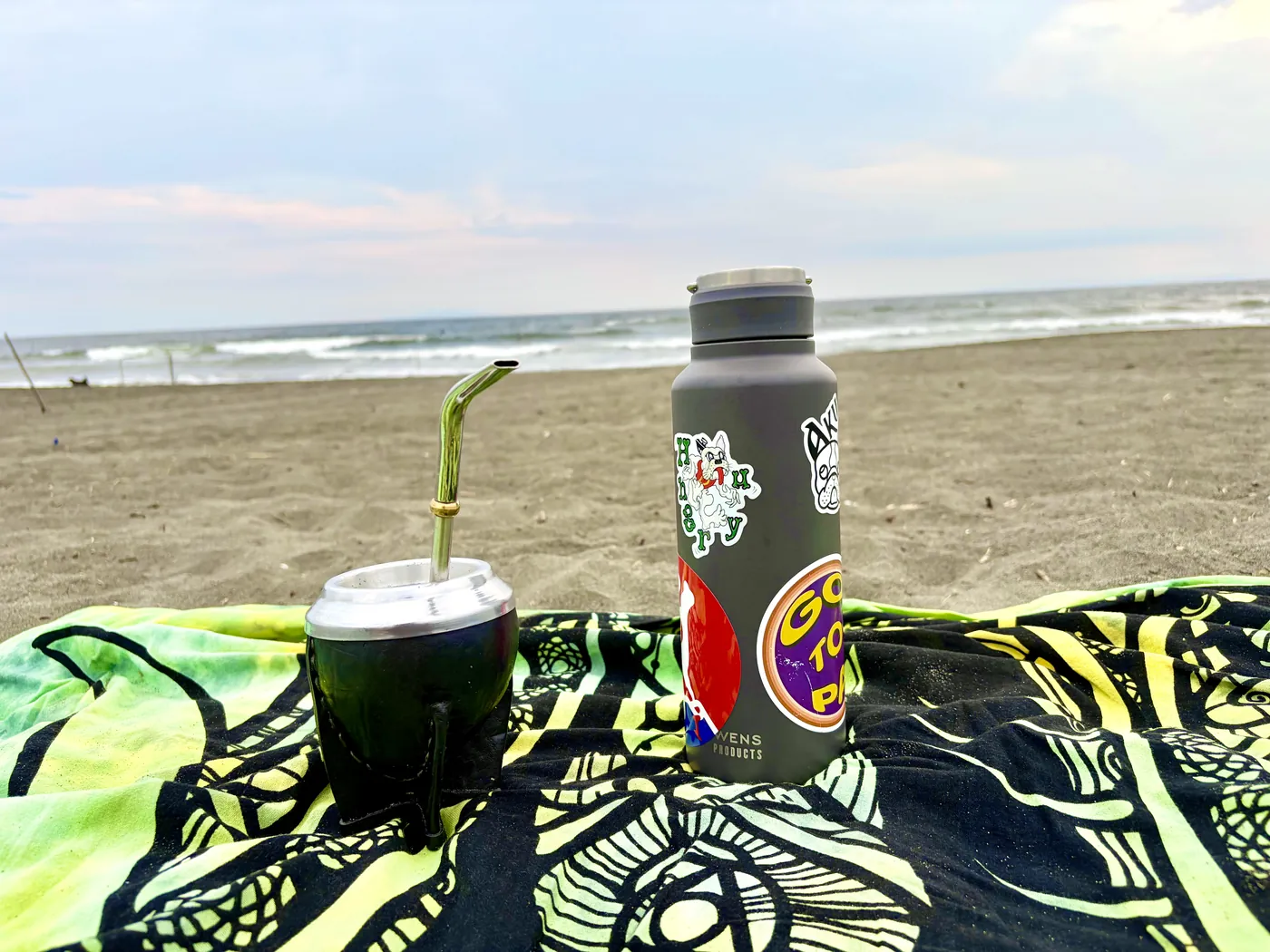
I flew to the Amazon looking for a secret trick for making a company succeed, and what I found there was the power of plants and gratitude for the people around me. That gratitude took me to Argentina, and there I found a culture of enjoying life — yerba mate.
Without those days there would be no me as I am now. Today, as on every day, I take a sip of mate, let my thoughts go to the friends I love on the far side of the world from Japan, and enjoy my own life for all it is worth.